It all started in 2012 with the Exhibition „Pixar – 25 years of animation“. I was so lucky to get a job there, working as a tour guide.
That was the first time I saw a 3D-Zoetrope. Magical. It becomes alive only by mechanical means. A bit like a 3-dimensional flipbook
This is it …
I found out, that it’s possible to build Zoetropes with record players. I got all record players available in the thrift shops around. I could even borrow on old grammophone. That’s perfect, because you can ajust the speed …
… quite a while ago. This little boy is making his drivers license now …
I made several Zoetrope projects, but to animate sweets wouldn’t go out of my mind.
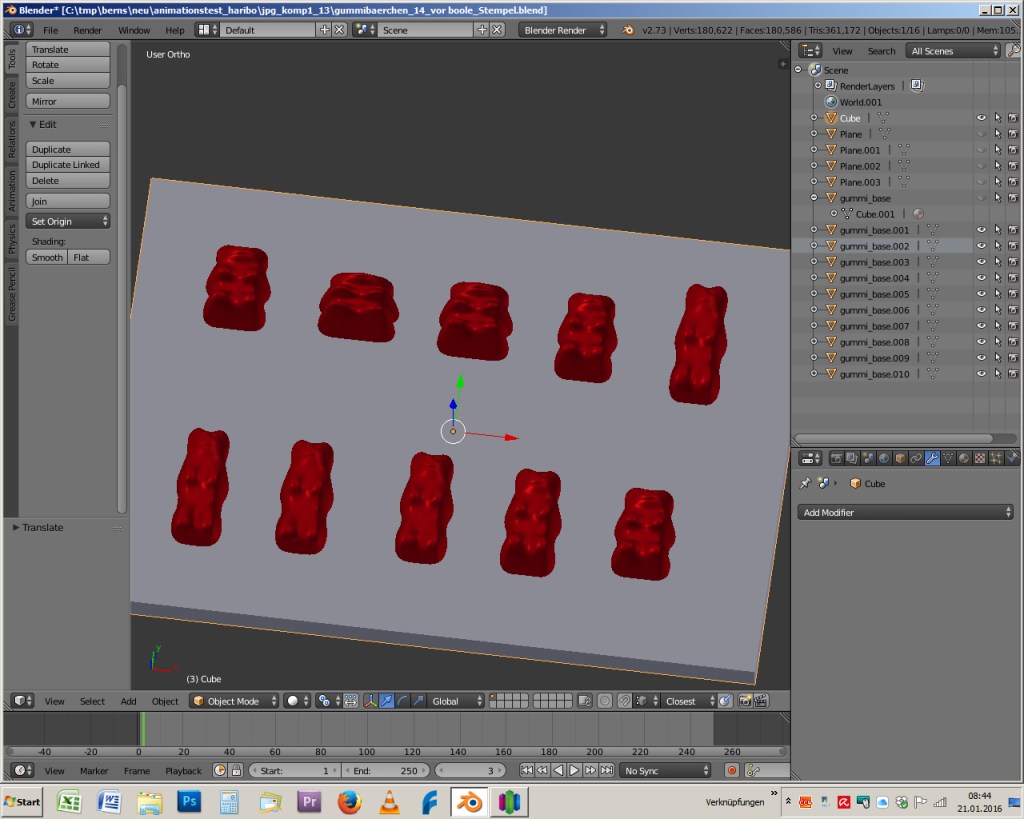
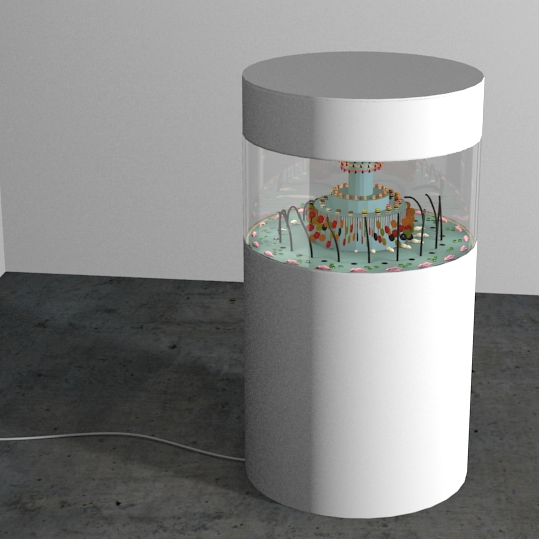
First step: a 3D simulation
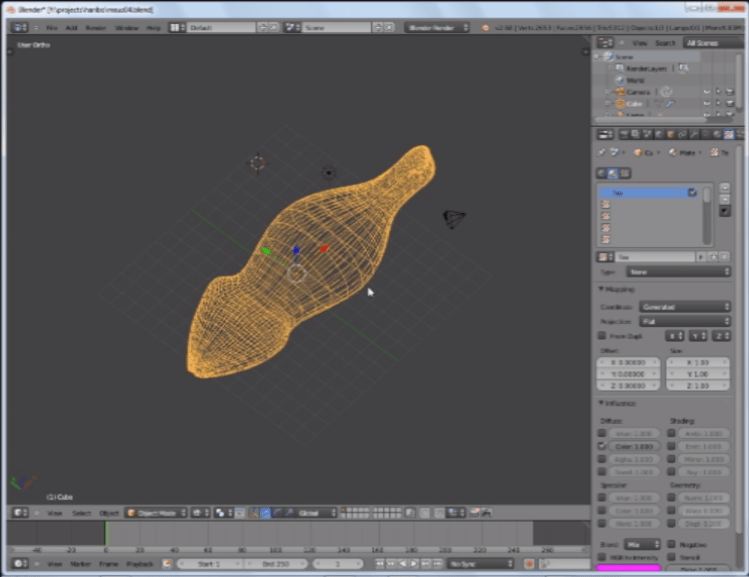
And that was the plan:
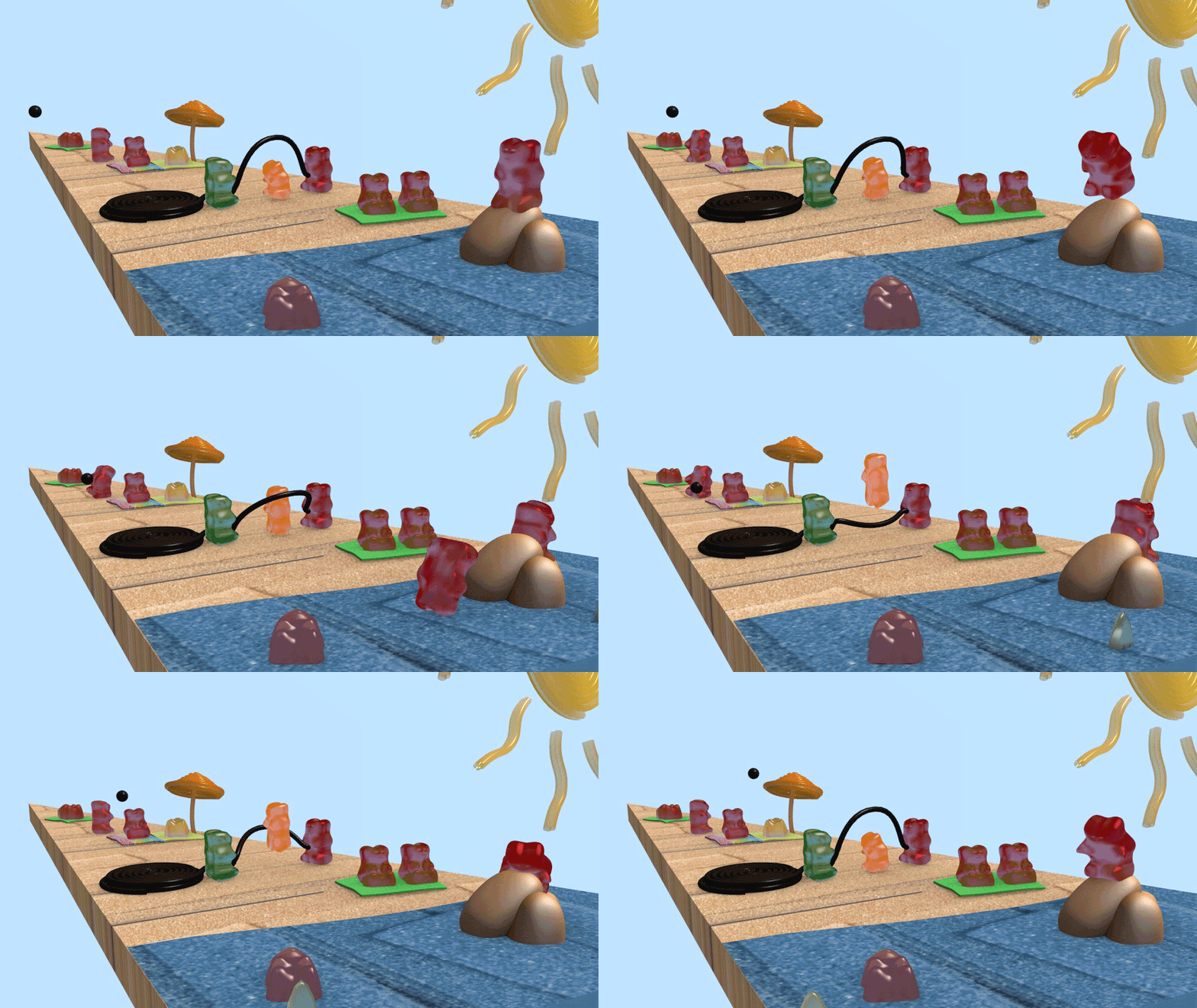
I wanted to make the animation disc exchangable, to not have to decide for only one animation. I could think of a thousand. One of them maybe a beach scene?
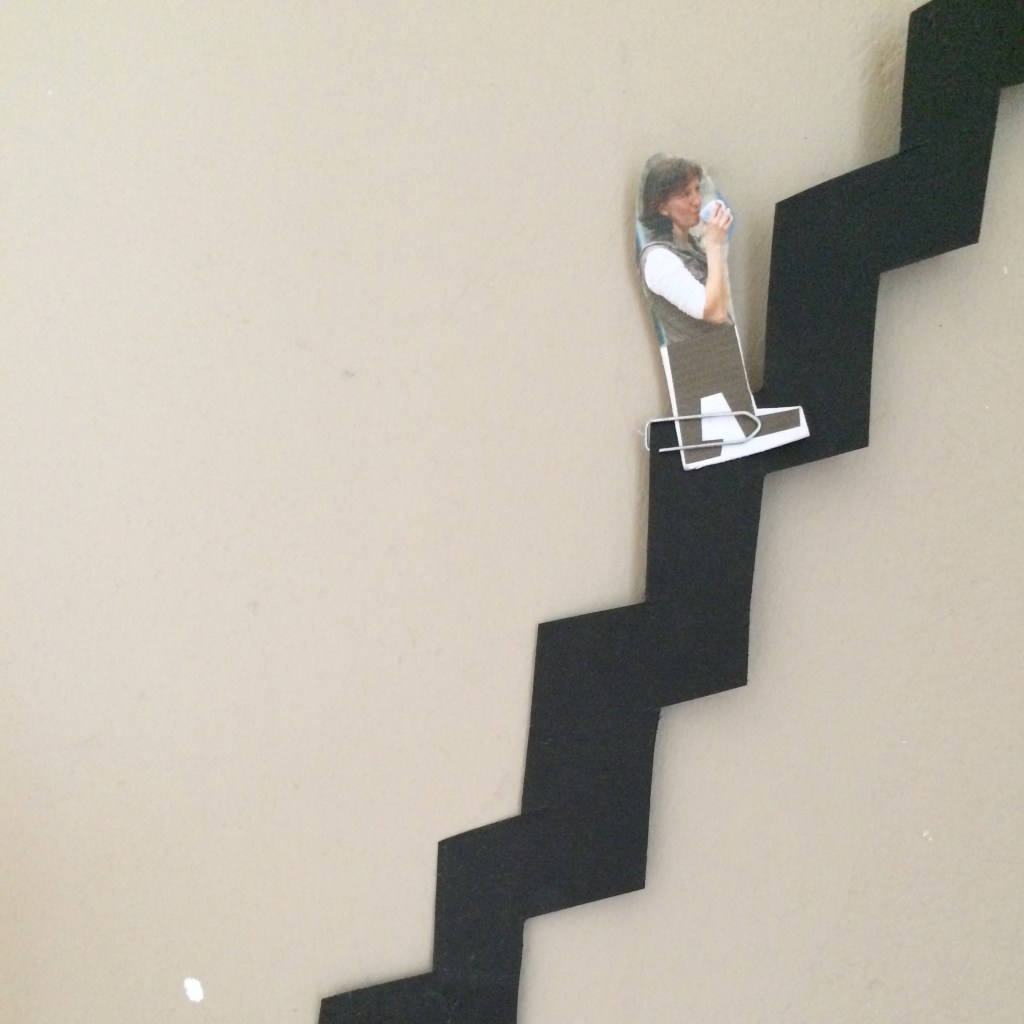
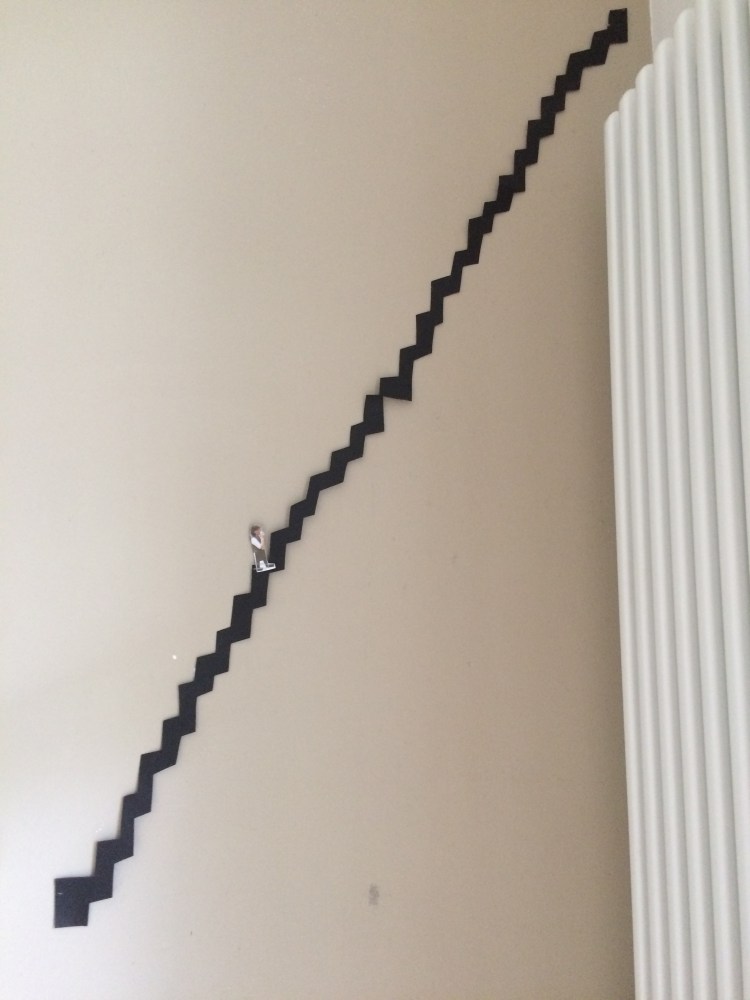
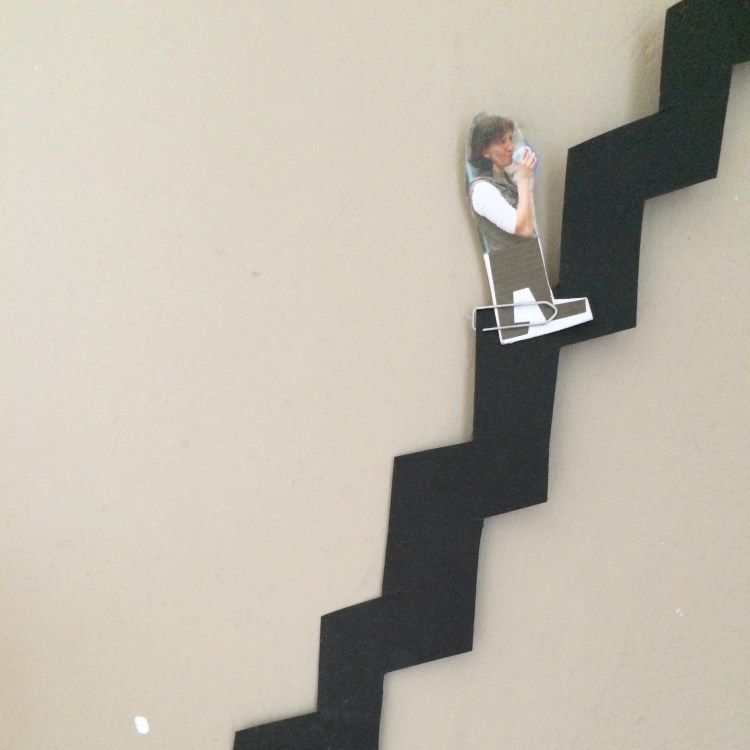
But I could see already, that this was going to be a lot of work. So I made this little graphic with a little me. For every step foreward in this project, for every problem solved, I would go one step up.
I attached more steps twice.
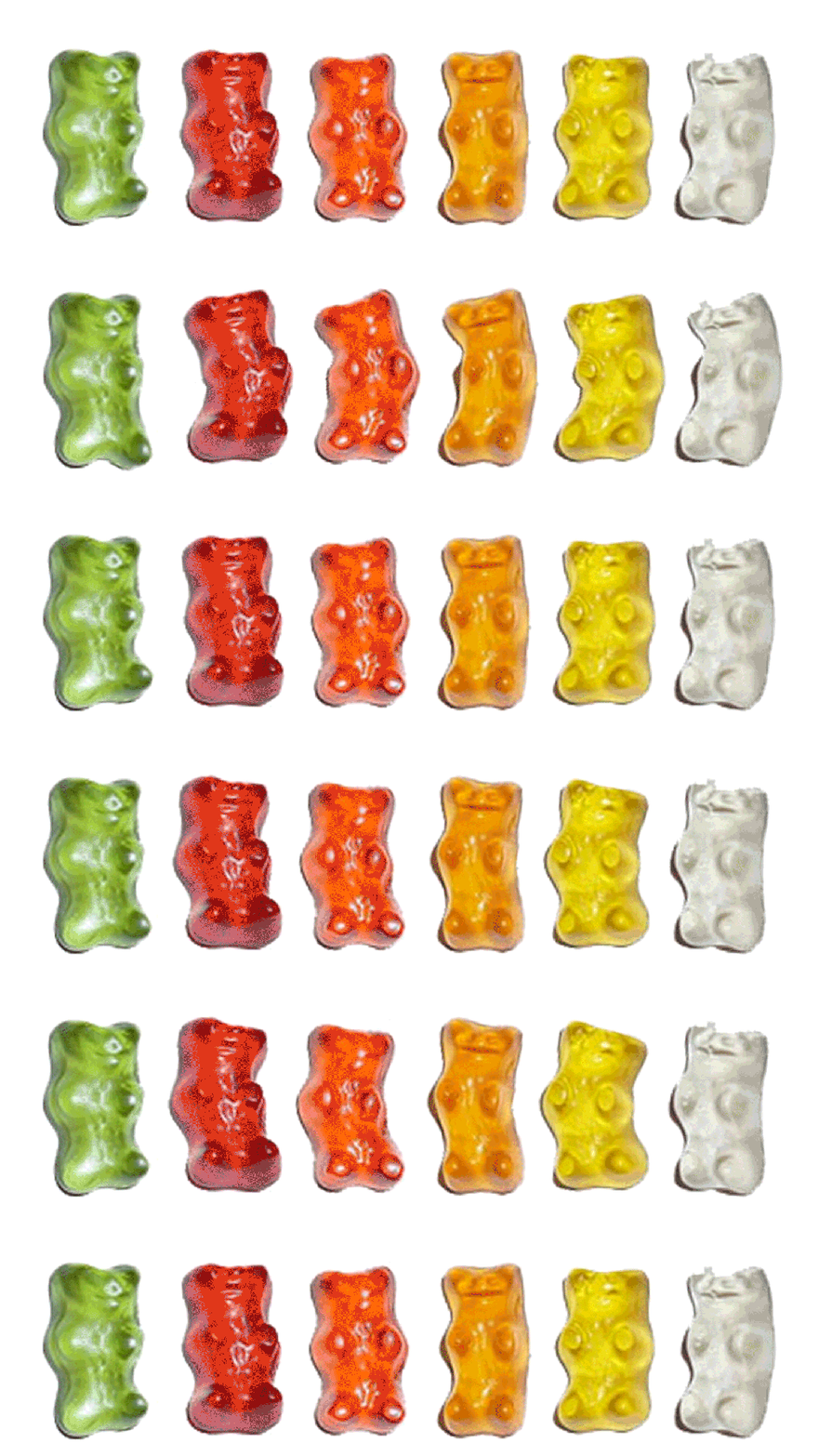
One problem was, how to make the figurines. Real candies would be charming but would look ugly after a while.
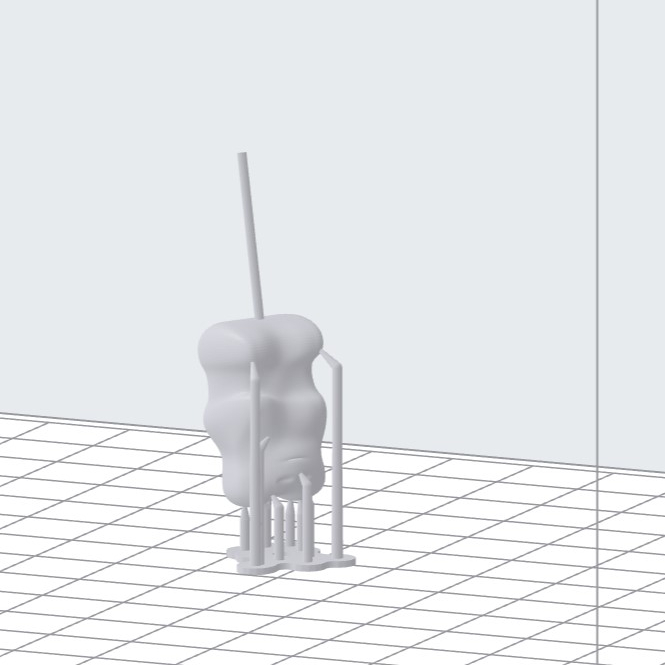
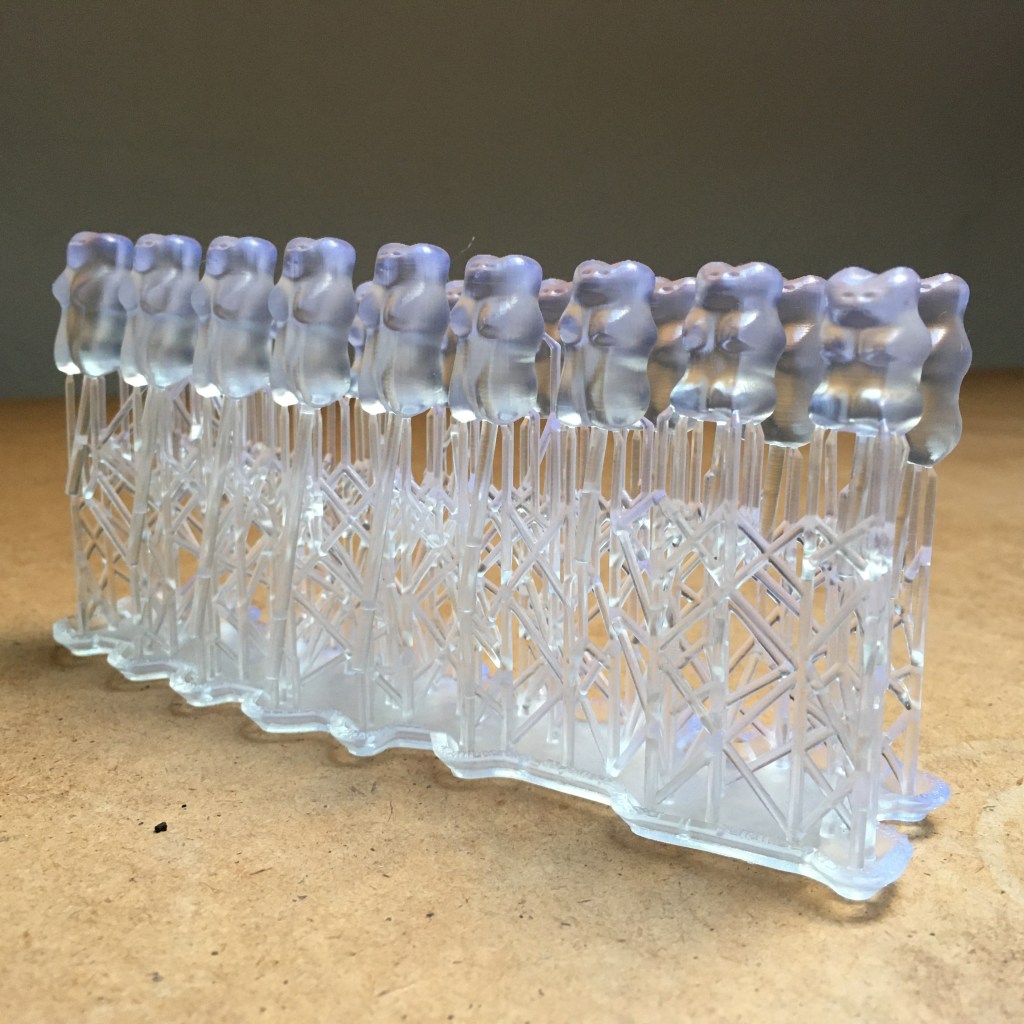
What about 3D-printing?

The quality of FDM-printers was not good enough. And SLA wasn’t affordable at that time.
I still work with 3D-printers, from these days, and still print Gummibärchen whenever I test new printers (SLA would be my choice now!).
I decided for real sweets and learned how to cut, glue and drill them into shape.
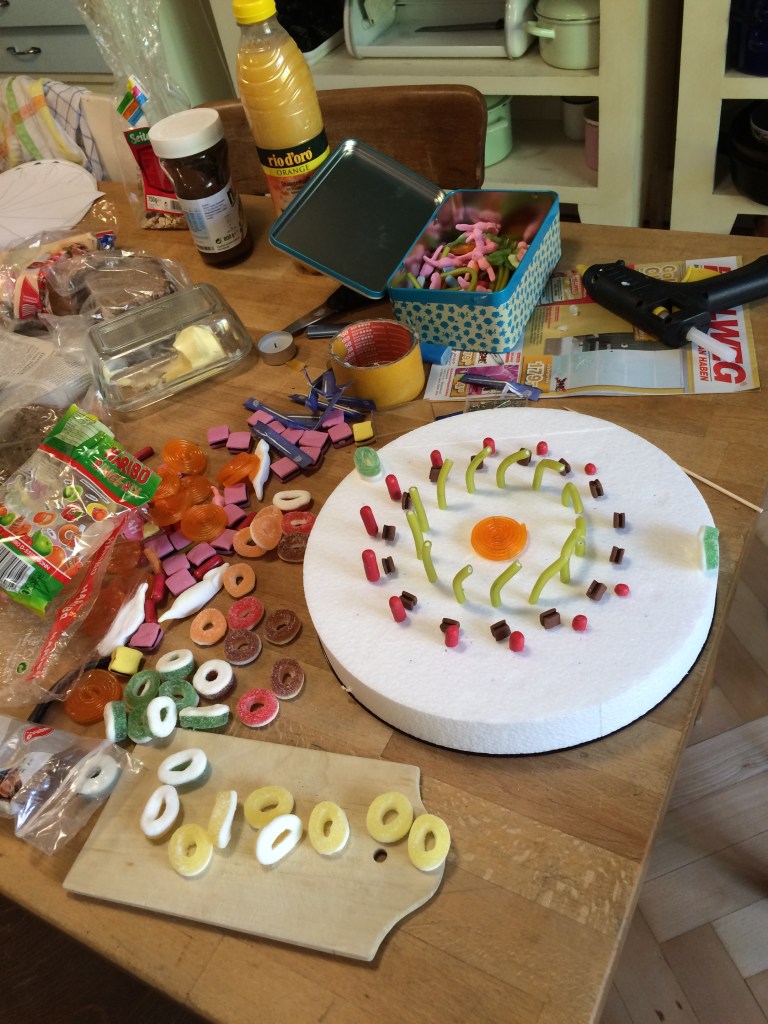
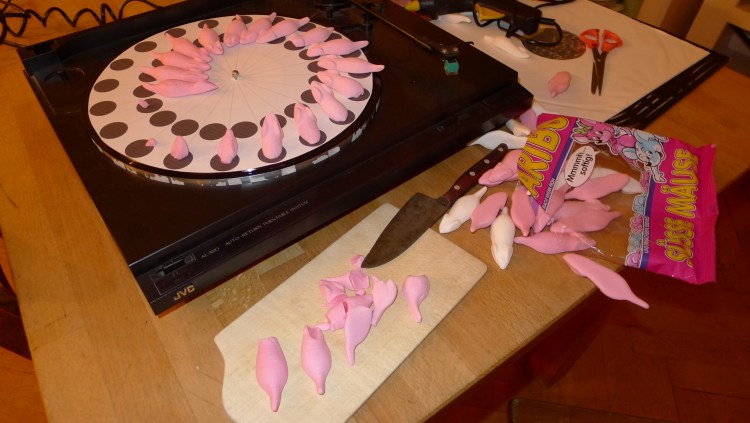
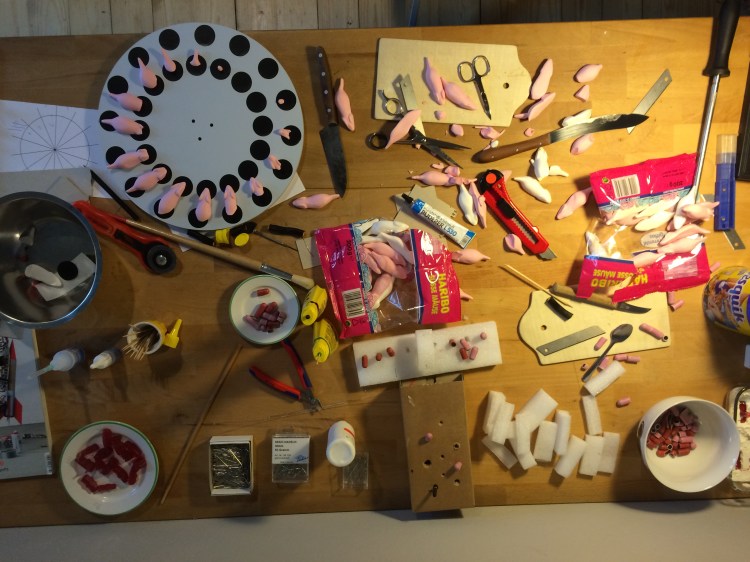
Literally into shape. Squash and strech – first principle of animation!
So I set up a chamber of torture for gummy bears

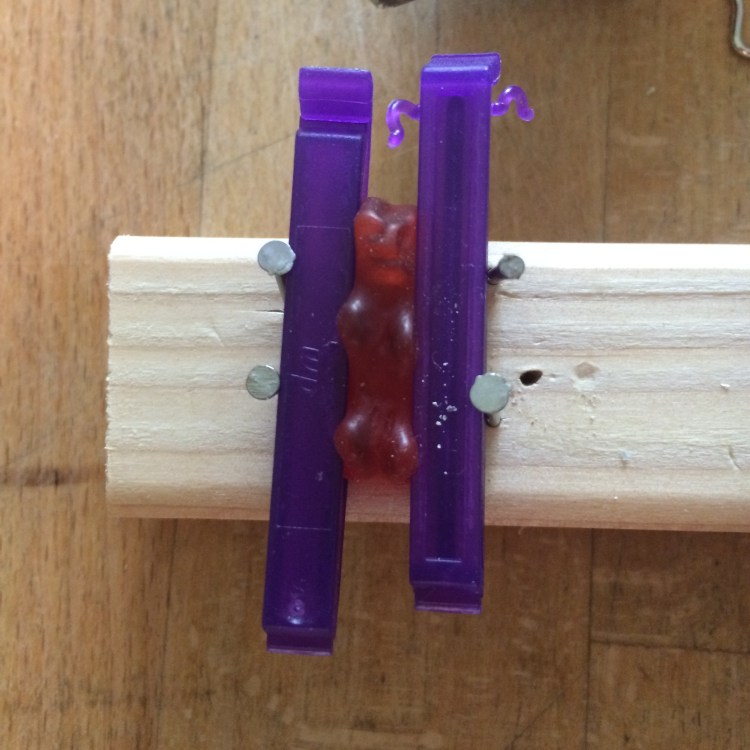
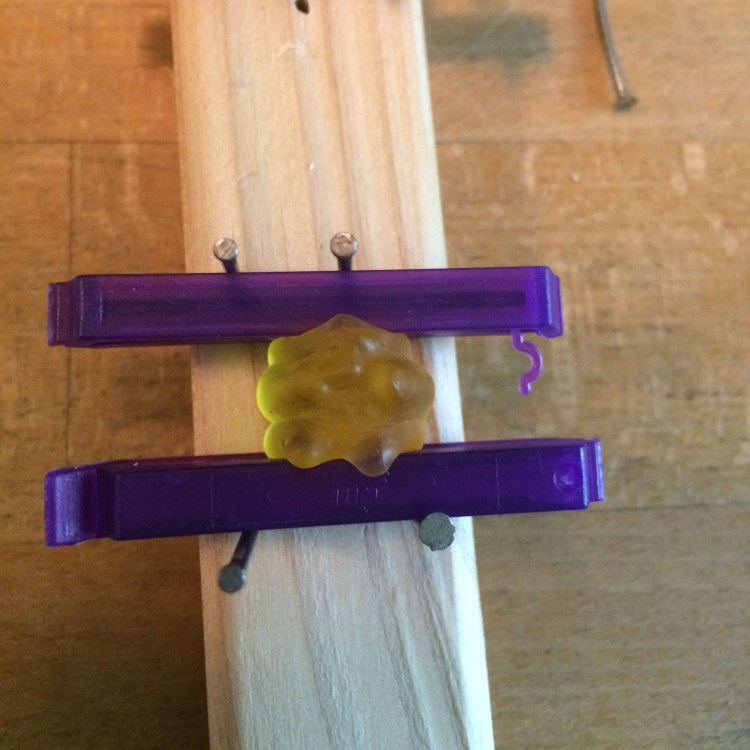

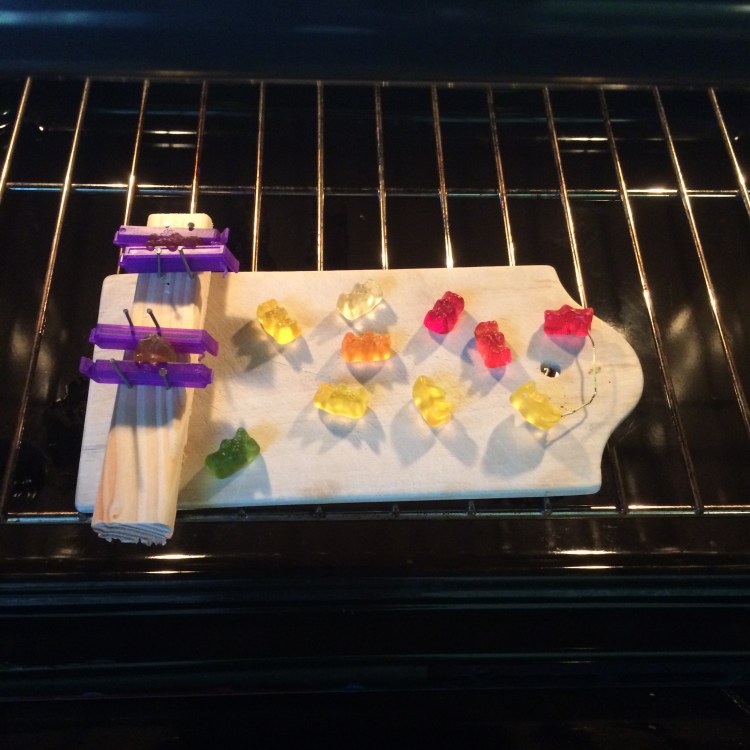
Adding heat .. 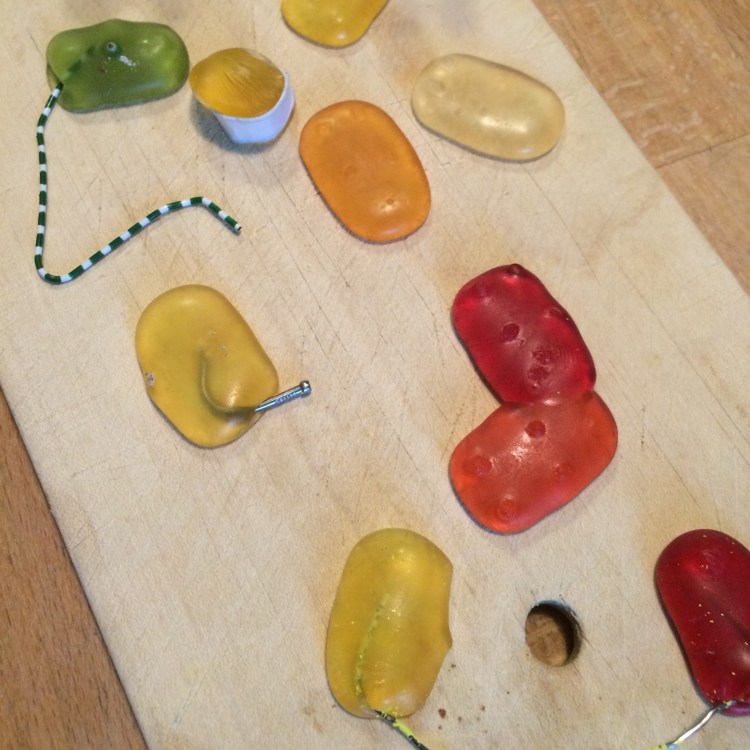
… didn’t work!
All of this didn’t work, so I decided to make them, like they make them in in the factory. They are poured into molds of starch.

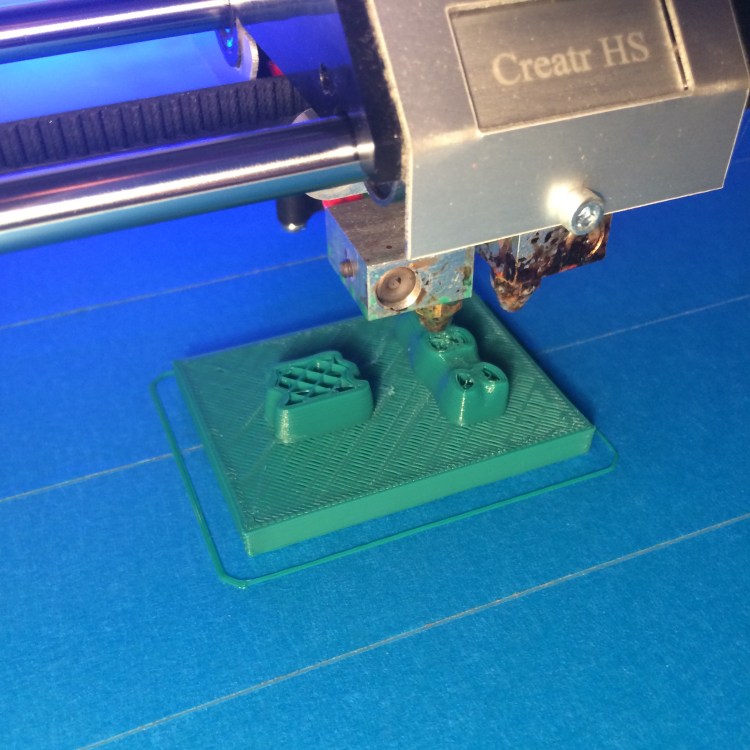
I 3D printed … 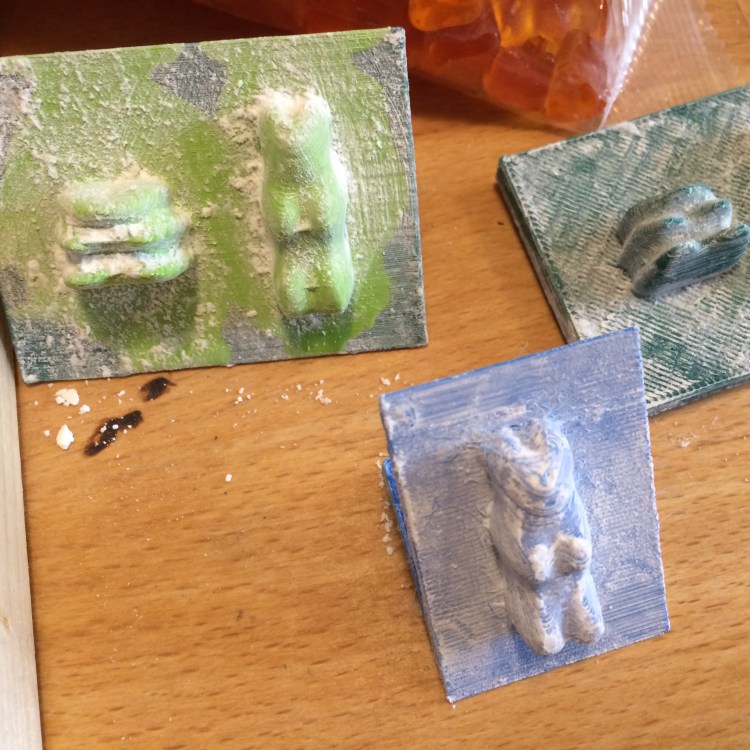
… the stamps for the molds. 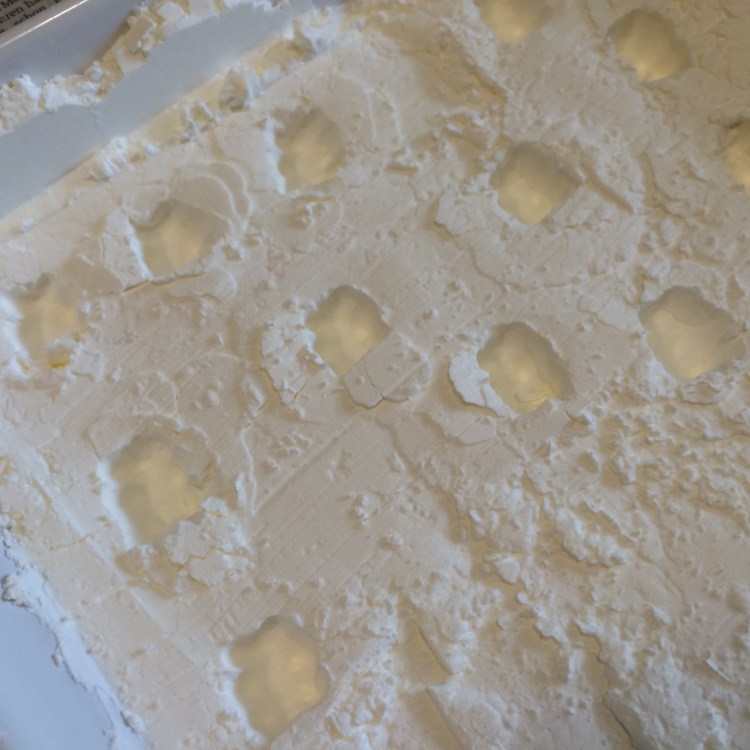
But the starch would clump.
Corn starch? Potatoe starch?
Researching about the „product humidity measurement in fruit jelly production“ 
Another recipe? 
Luckily I got help …
… from a professional. Thank you sooo much, Petra !
One problem solved. One step up!
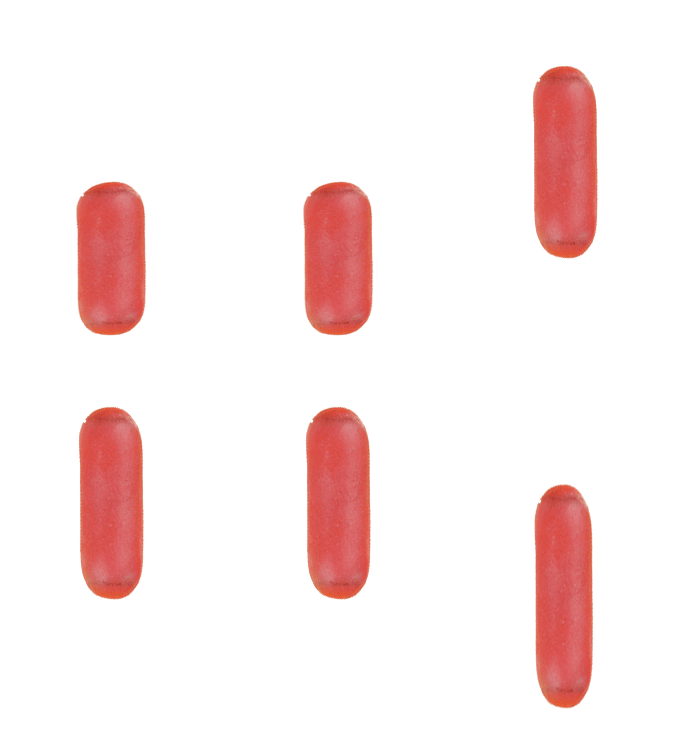
Same with the so called „Staffetten“ –
How squash and strech them?
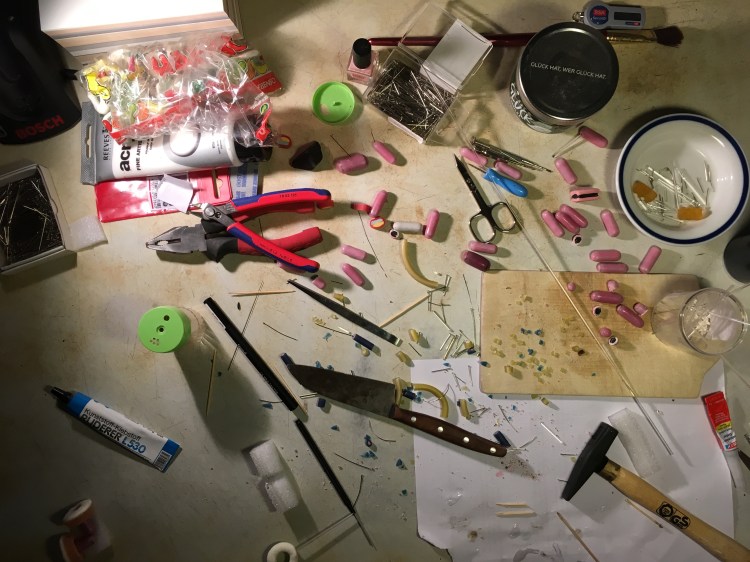
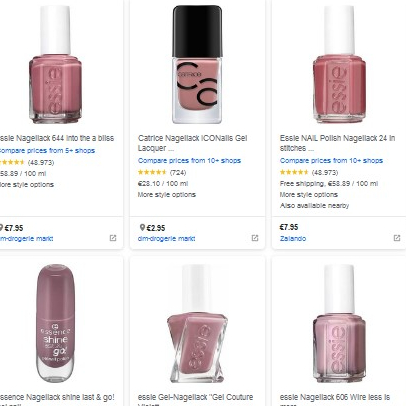
Cut, glue and paint the seams with nailpolish!
The technical questions made me even more headaches
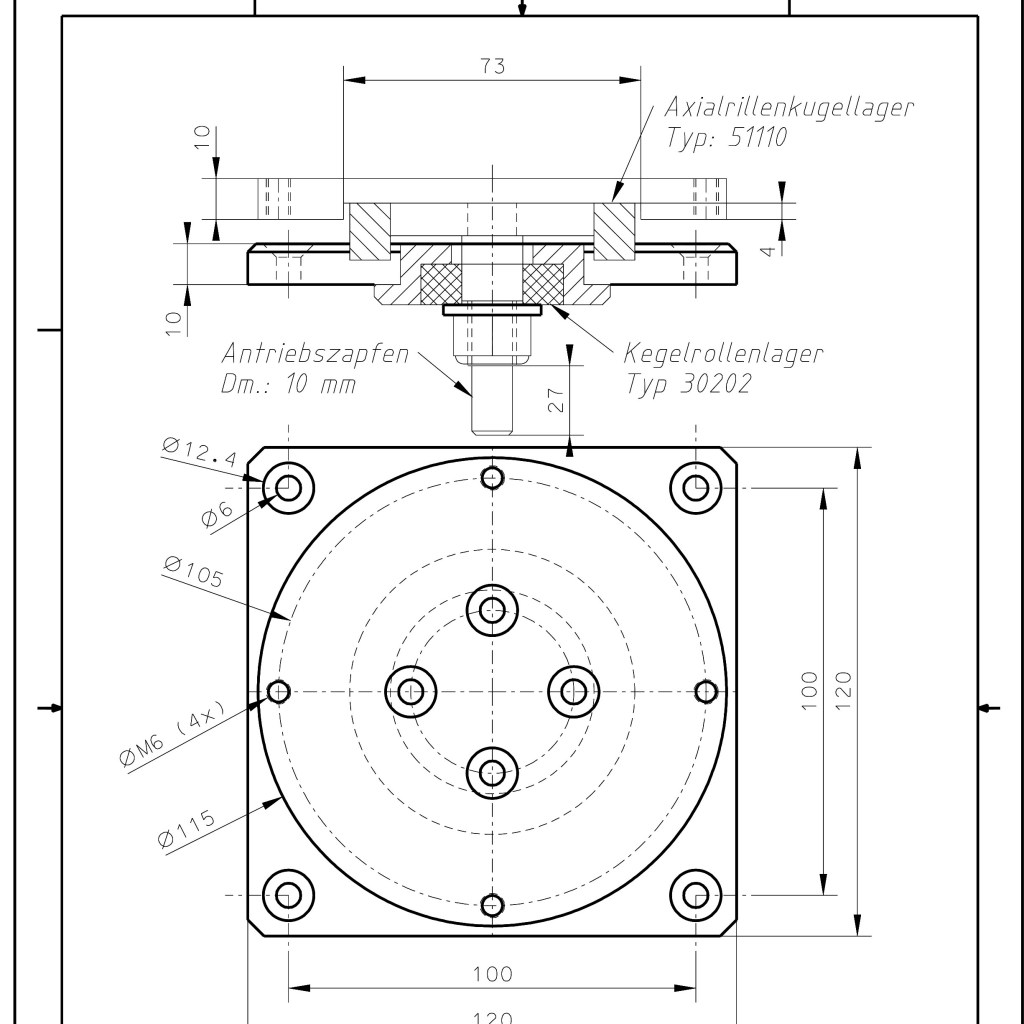
Motors 
Mechanics 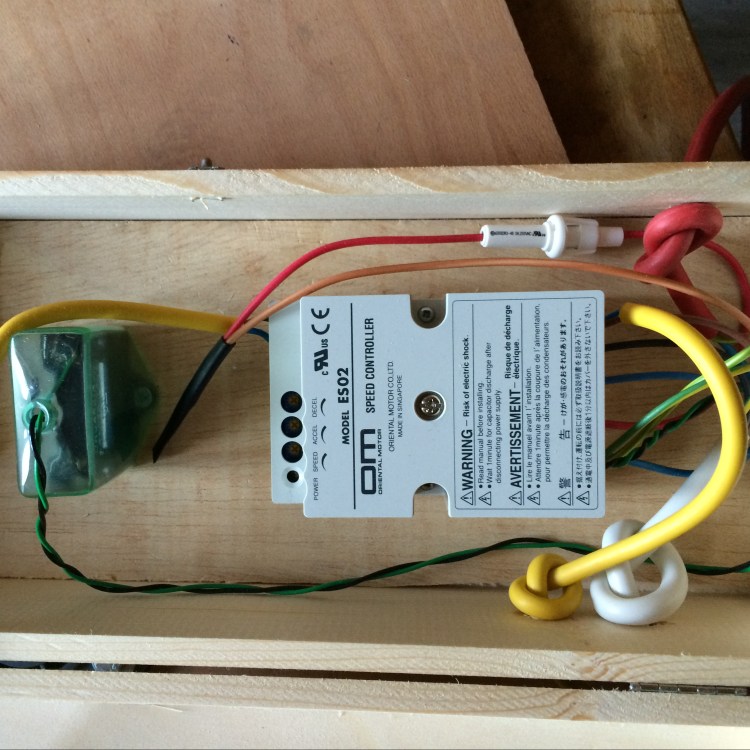
Electronics
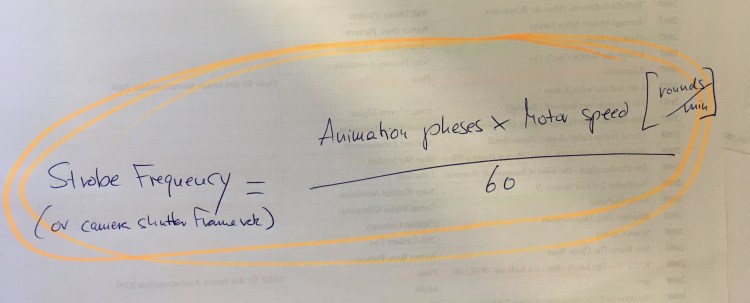
I had to decide how big, how many figures, how fast the spinning, how much light … Once I put everthing in this equation, it was easier to find out how to work with all kinds of hardware.
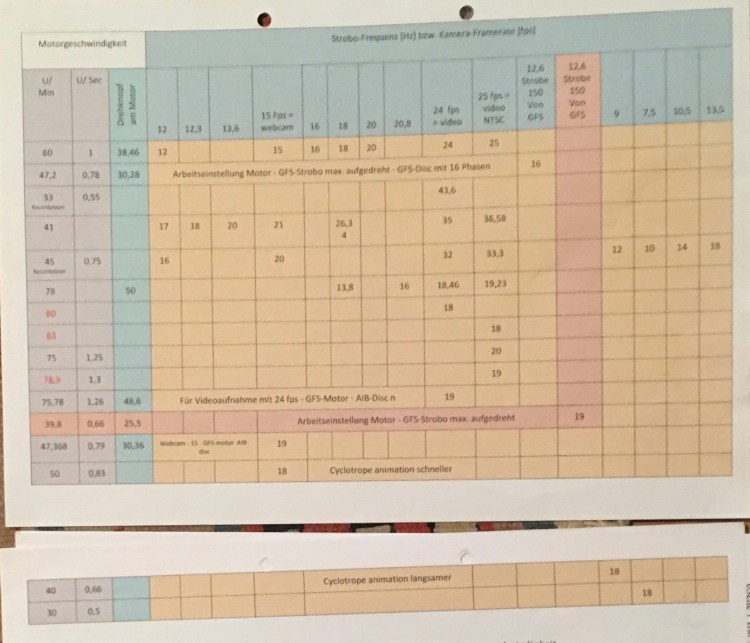
But who would be able to build the housing?
I was so lucky to meet Claus, an architectural model builder, who spent a lot of time thinking his way into all the problems. Thank you sooo much, Claus!
I started to learn Raspberry Pi, but gave up when it came to more complicated circuits. But Claus knew Uli, who was so kind to help with the electronics. Thank you sooo much, Uli!
And finally Claus knew also Thomas, who was so kind to help with the programming. Thank you sooo much, Thomas!
Many thoughts and planning went into it.
I wanted to have it small enough to be transportable.
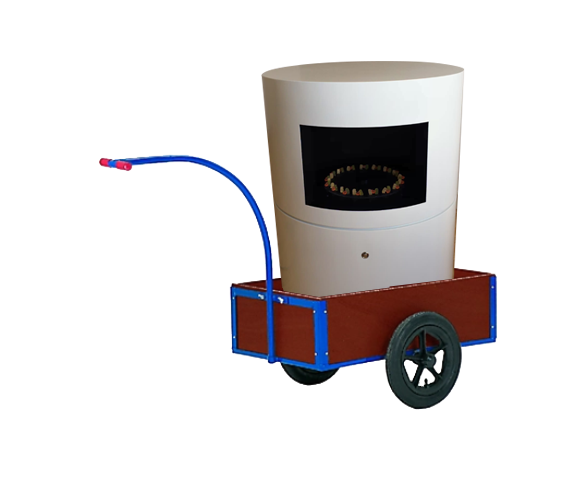
And I wanted it to work in daylight. Normal 3D-Zoetropes only work in dark rooms or with the help of cameras.
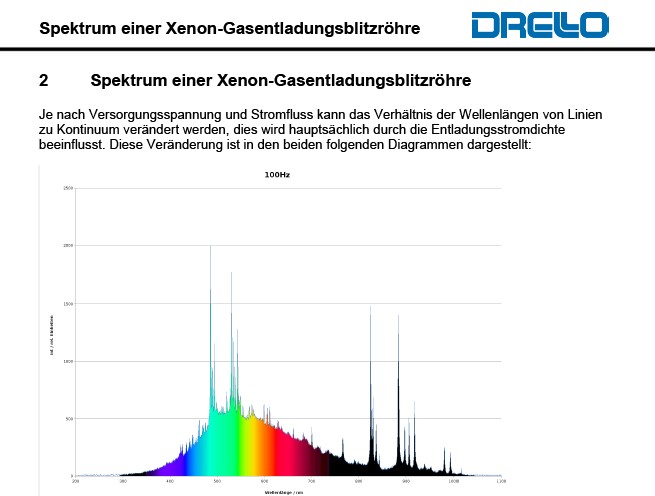
The light choice was still difficult, so I had to learn the differences between expensive xenon strobes which work much better for this purpose and LED strobes which are much more affordable.
The colour of the light is also to be considered, especially when lighting food. And not least the emitted temperature in the wooden housing. Didn’t want to start a fire.
I found this technical paper from the german strobe company Drello in the internet. Mr. Preschel was so nice to spend an afternoon with me, helping and explaining. Thanks sooo much, Mr. Preschel!
But for many complicated reasons it didn’t work the way we thought. And we had to build the whole thing twice.
Before the second build, I tried to simulate as close as possible, to choose the right size, light amount, window size and eye distance. Even the inside colour mattered.

… and then, one day (after a few years), I bought the last sweets.
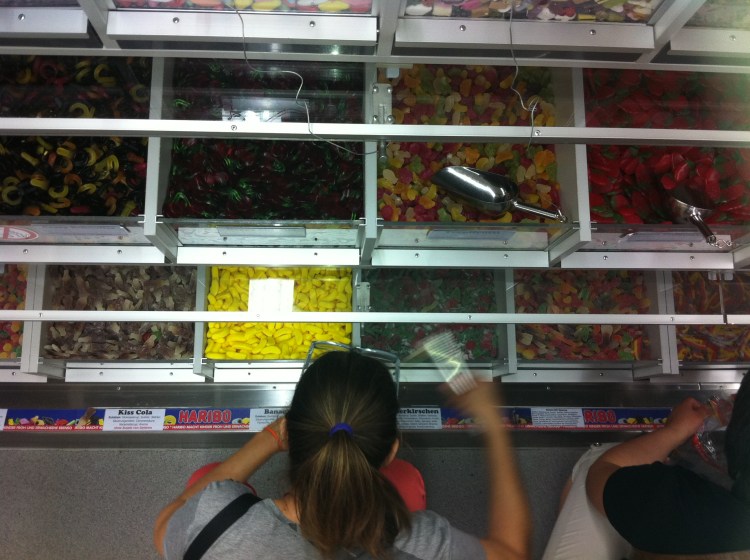
And put the last animation together
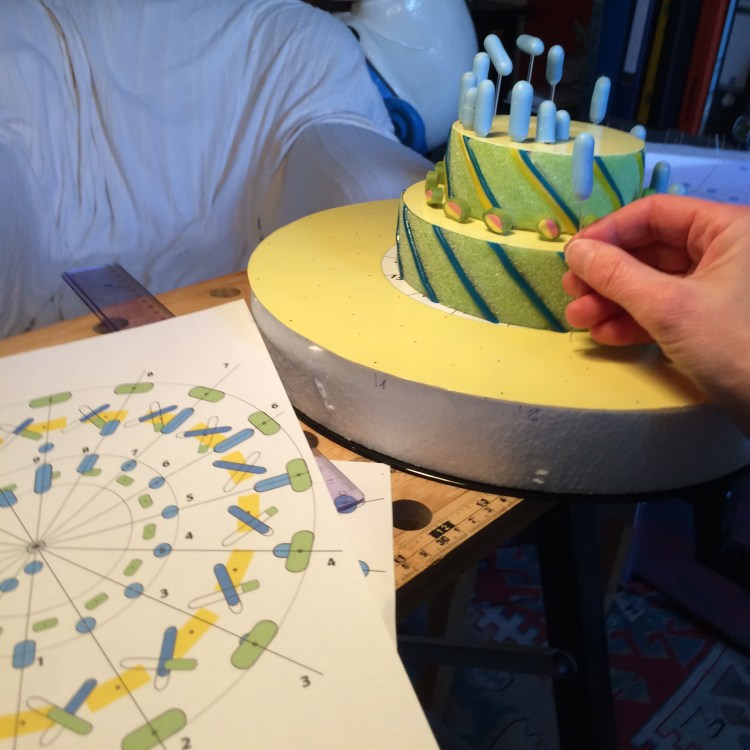
And there it was:


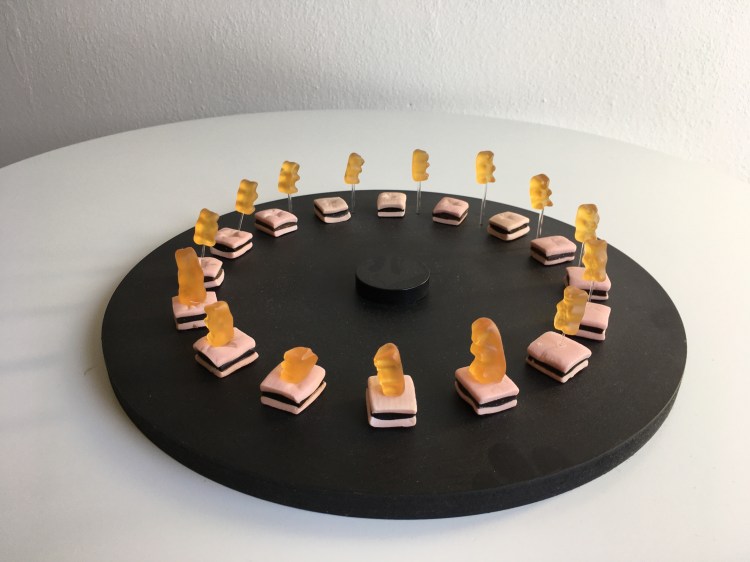
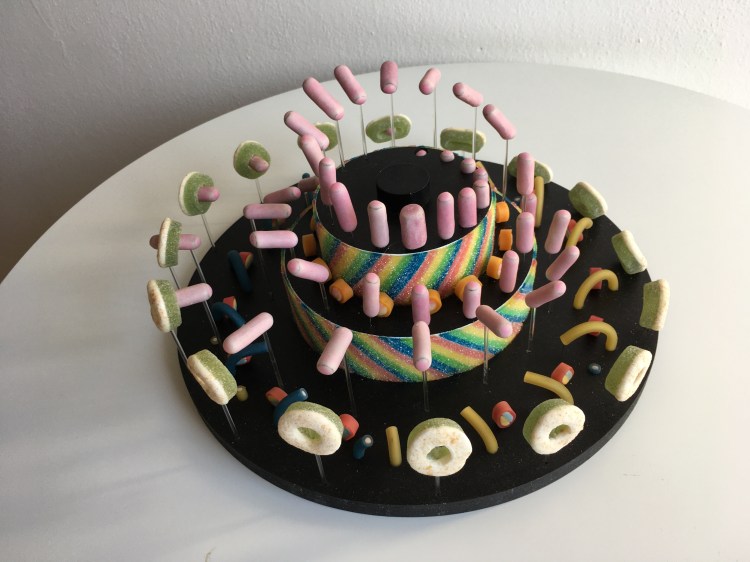

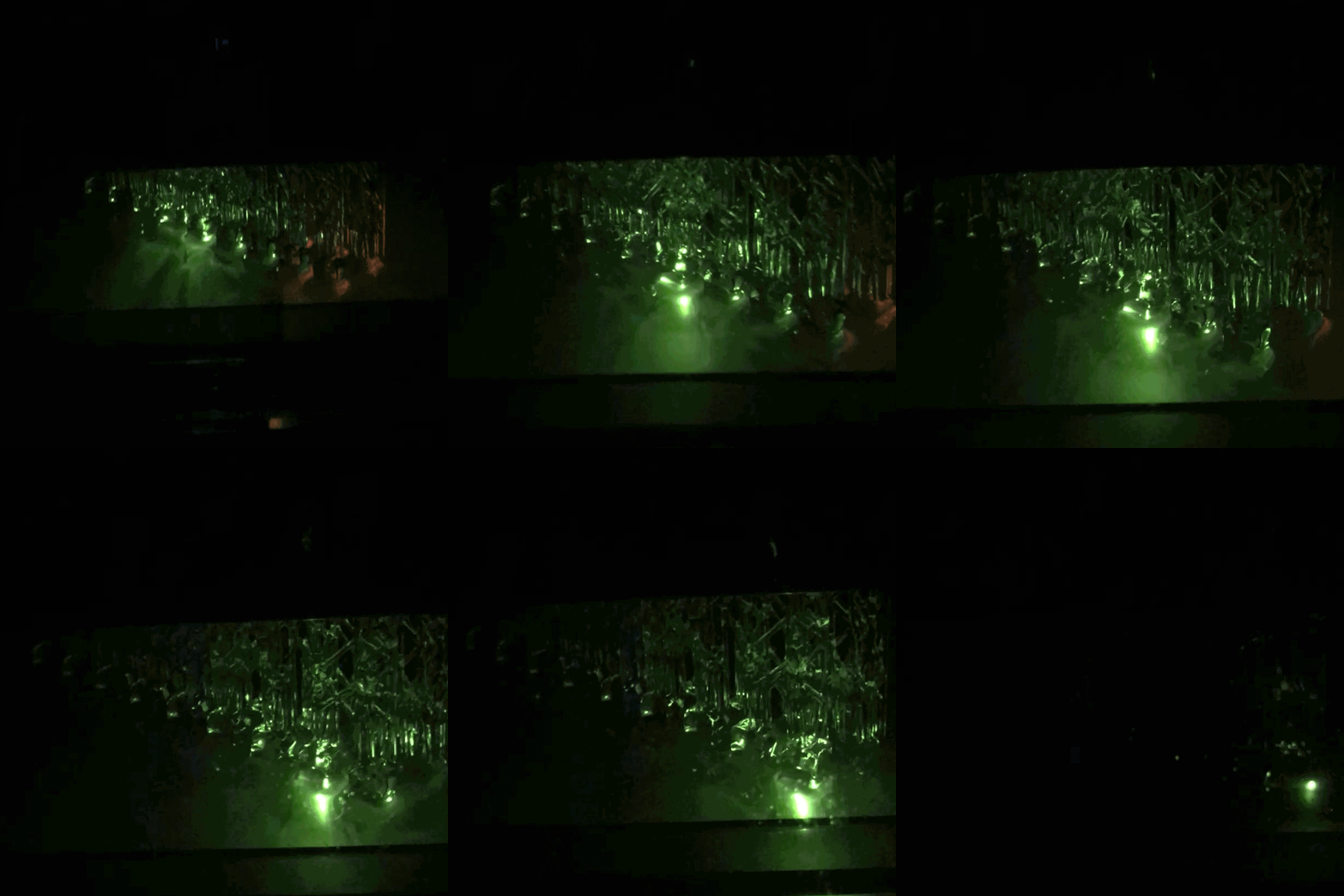
Very good visible here why it took me so long to capture it on video. It’s another story to match camera shutter and strobe frequency.
I am very happy with the result. And, with this little documentation, I want to thank everyone who helped. It would never have been possible without you all!
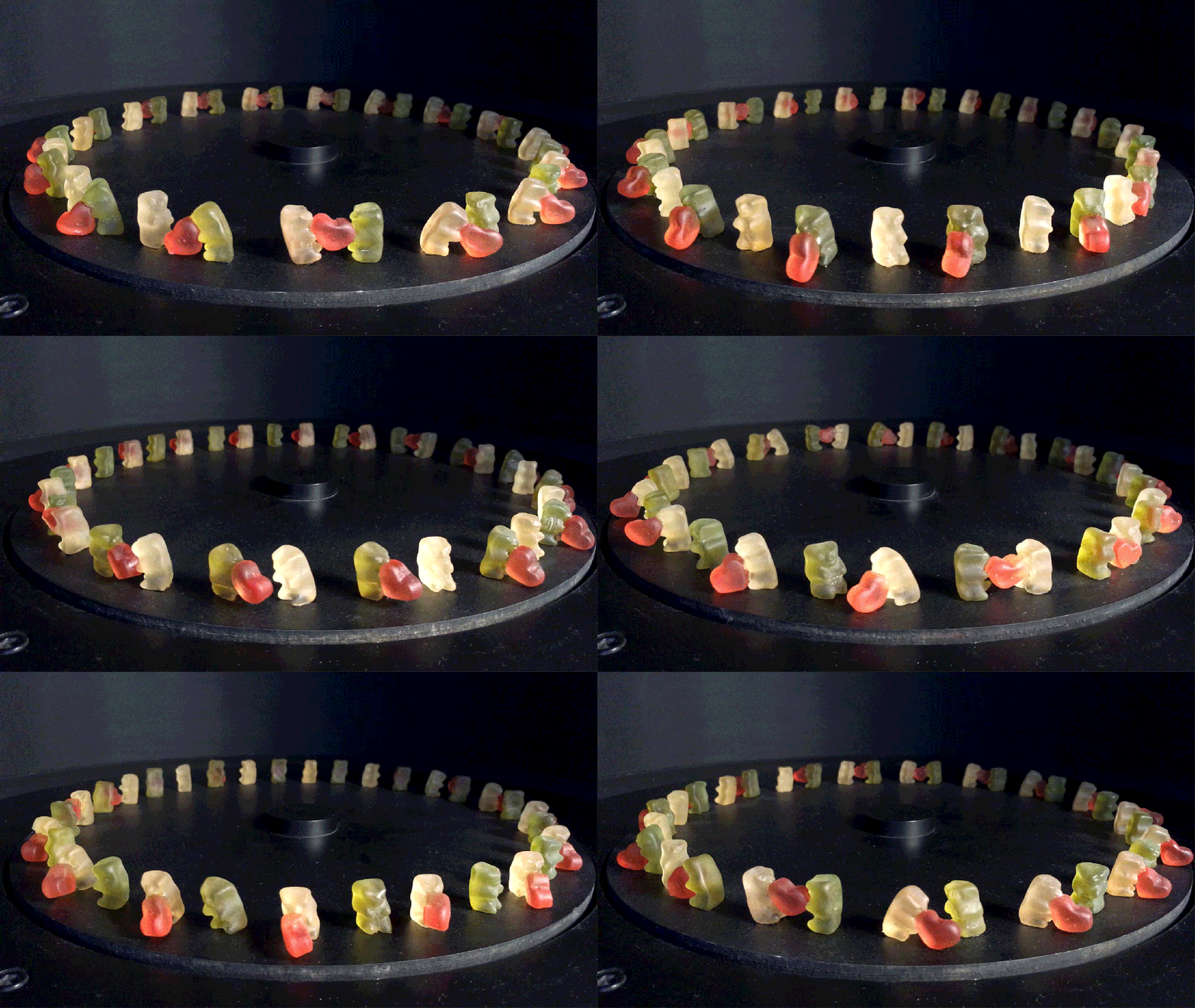
 3D-Zoetrope